




















Short answer: 32-way damping adjustment gives the damper 32 discrete positions between fully soft and fully hard. The knob changes how much resistance the piston offers as it moves, which changes how quickly the body settles after a bump and how much weight transfer you feel in a corner. It does not change ride height, spring rate or alignment — those are separate adjustments, and confusing them is why so many people adjust the wrong thing.
Thirty-two clicks sounds like marketing until you have to set them. The number matters less than what the range is calibrated for: a 32-position adjuster is only useful if the middle of its range is where most of your customers actually drive. This guide covers what the adjuster changes, what it does not, and a repeatable method for finding a setting instead of guessing.
What the adjuster changes — and what it doesn't
| Adjustment | What it controls | What it does not do |
|---|---|---|
| Damper knob (32 positions) | Resistance inside the damper as the piston moves | Does not change ride height or spring rate |
| Spring perch / locking collar | Ride height and corner weight | Does not change damping force |
| Spring rate (by spring change) | How much load each corner carries per mm of travel | Cannot be fixed by turning the knob |
| Camber plate / top mount | Alignment geometry | Does not affect damping |
The practical consequence: if a car bottoms out over a speed bump, turning the knob harder will not fix it. That is a spring rate, ride height or bump-stop problem. If a car floats and keeps oscillating after a dip, that is a damping problem — and that is what the 32 positions are for.
Why a wide range is useful in the first place
A single fixed damper has to be a compromise across every road and every load. A wide adjustment range lets one kit cover situations that would otherwise need different valving:
- Street use on poor surfaces — softer settings let the wheel follow the road instead of skipping over it.
- Loaded or fully occupied cars — more damping keeps the body from wallowing when the rear is heavy.
- Spirited driving and track use — firmer settings reduce body movement and make the car feel more direct, at the cost of compliance.
- Mixed fleets and resale — one part number can be set up for several customers, which is why distributors prefer adjustable kits over fixed ones.
A repeatable method for setting the 32 positions
- Start at the soft end and count clicks in one direction only. Write down the reference point — "8 clicks from soft" means nothing if you started counting from the other end.
- Set front and rear equal as a baseline, then drive the same 2–3 km loop with a mix of surfaces.
- Change one axle at a time, in steps of four clicks. Small steps hide in noise; big steps tell you something.
- Judge on the third oscillation. After a bump, the body should settle within one to two movements. If it keeps rocking, add damping. If it feels harsh and skips, take damping out.
- Write the final numbers on the setup sheet — front clicks, rear clicks, ride height, tyre pressures. A setting you cannot reproduce is a setting you do not have.
Two traps worth knowing
More clicks is not "better"
The hardest setting is not the fastest setting. Past a point, extra damping stops the suspension from following the road, the tyre skips, and grip falls. On a rough surface the softer end of the range is usually quicker.
The knob only works if the rest of the kit is right
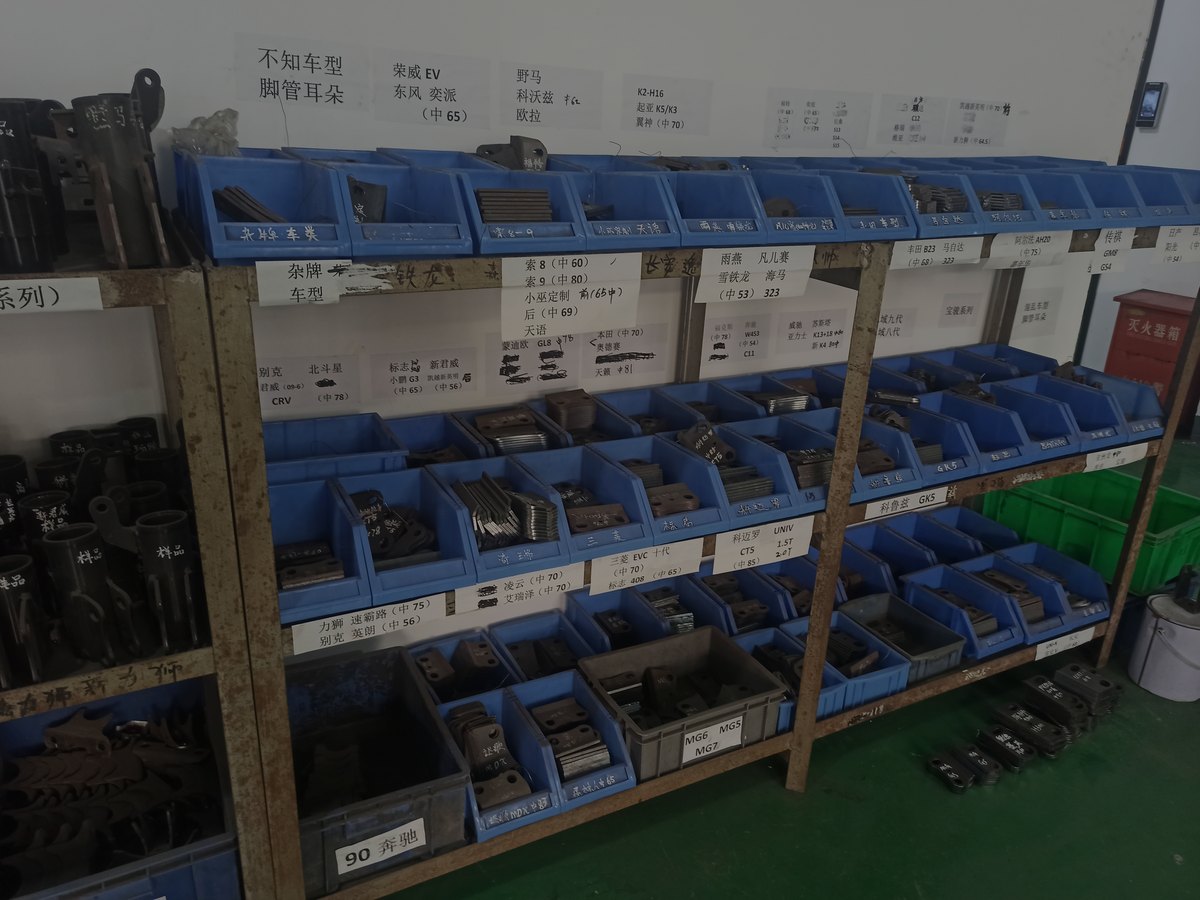
Damping is one variable in a system that includes spring rate, ride height, bushings, tyre and alignment. A kit set up with the wrong spring rate cannot be rescued by turning the knob. This is why we build per chassis rather than selling a universal kit — the spring rate has to match the corner weights of the actual car.
FAQ
Does 32-way adjustment mean 32 clicks between soft and hard?
Yes — 32 discrete positions covering the full range of the adjuster, from fully soft to fully hard.
Do I need to adjust front and rear differently?
Often, yes. Front and rear axle loads and suspension layouts differ, so the same click count on both axles rarely gives the same behaviour. Adjust one axle at a time and judge the balance of the car, not the number on the knob.
Will an adjustable kit feel worse than a fixed one if I never touch it?
No, provided it is set sensibly out of the box. The advantage of adjustment is that the compromise can be moved later — for a different road, a different load, or a different customer.
Where this fits in the range
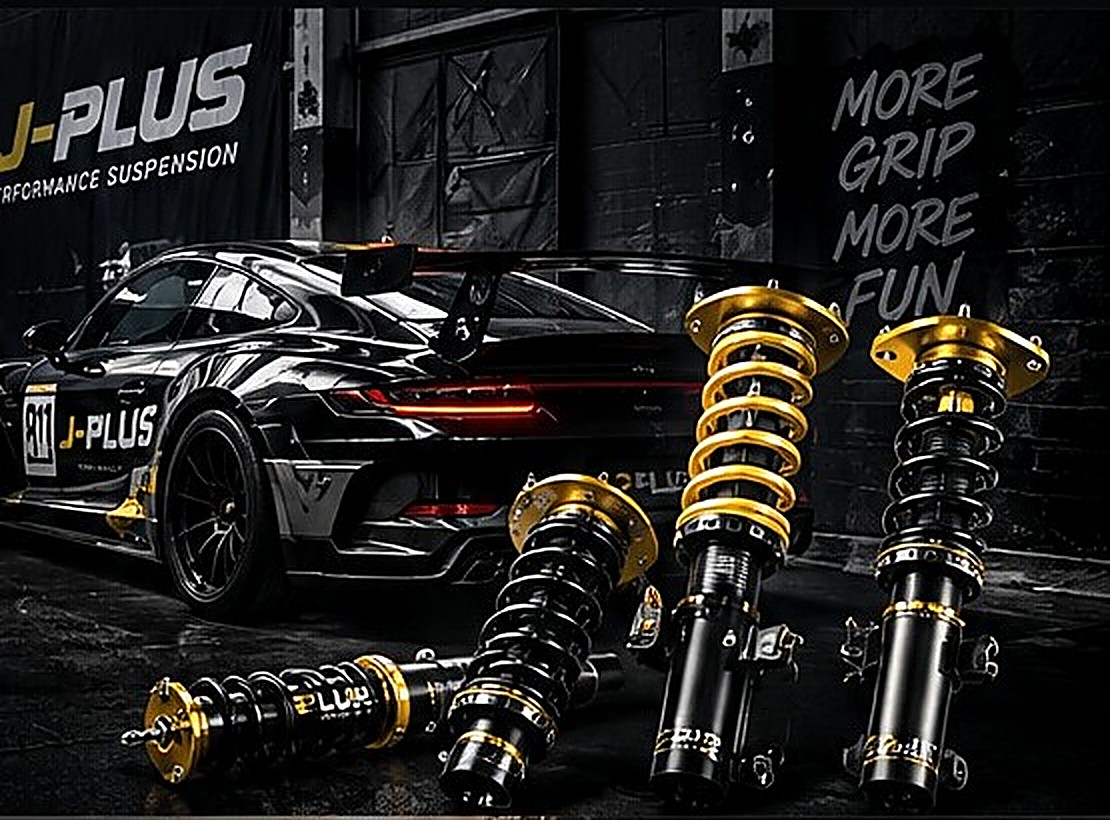
All J-PLUS kits use the same 32-position adjustment across six build types: single-tube street, single-tube sport, single-tube racing, inverted street, inverted sport and inverted racing. The difference between them is the design and the intended use, not the adjuster. Check the fitment guide for the chassis you need.
Choosing between design types? Read monotube vs twin-tube next, or ask the factory which build suits your market.