











Short answer: coilover MOQ is set by batch processes, not by the seller's mood — spring winding, machining set-ups, plating and printed packaging all run in minimum batches. Lead time is tooling plus production plus testing plus freight, and only the first and last of those can be compressed. The way to keep both numbers down is to order fewer item numbers at a higher quantity per item number, with your branding fixed early.
Most first orders from a new distributor fail for the same reason: the buyer asks "what's your MOQ and lead time" before deciding which item numbers they need. The answer that comes back is either a minimum that sounds arbitrary or a lead time that slips. Here is how both numbers are actually built up, and the seven questions that make a supplier's answer verifiable.
Why a coilover MOQ exists
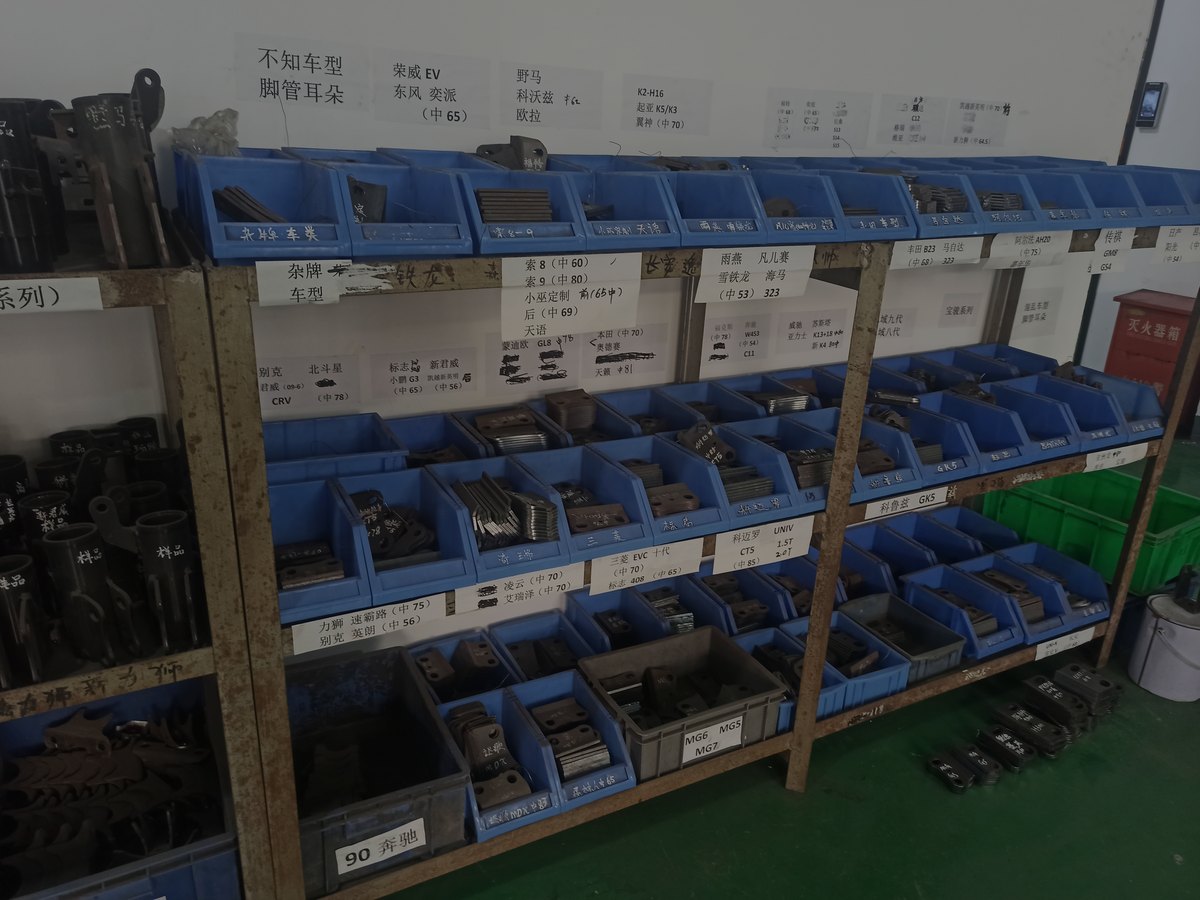
Four processes in a coilover kit run in batches, and each one sets a floor on quantity:
- Spring winding — wire is set up per rate and free length. A short run wastes the set-up; a long run is cheap per piece. This is usually the binding constraint on a new rate.
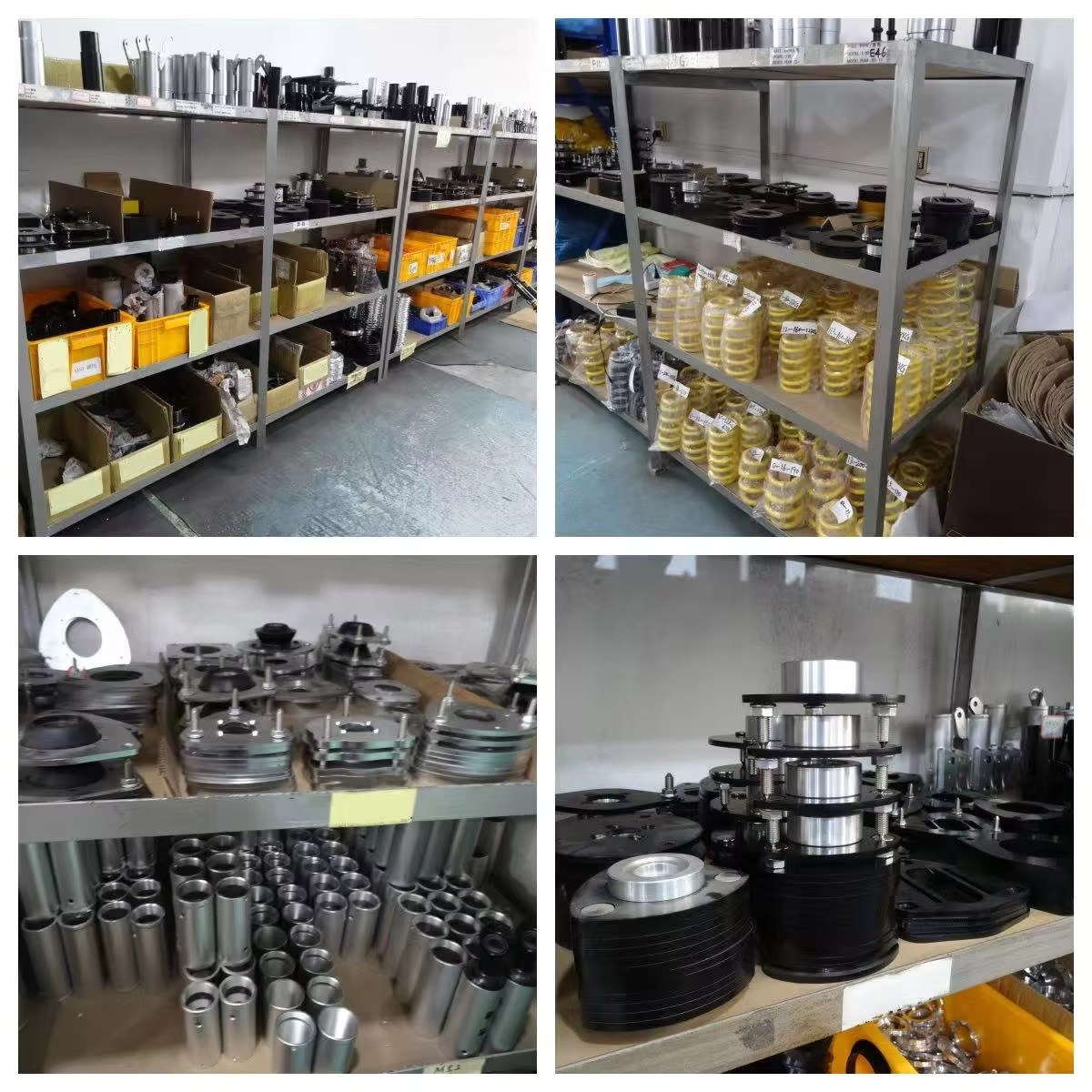
- Machining — bodies, caps and collars are bar-stock or cast parts. Set-up cost is fixed per item number, so spreading it over 50 pieces instead of 20 changes the unit price materially.
- Surface finishing — anodising and plating are tank processes. Small parts get loaded with other work or not at all.
- Packaging — if the box carries your logo, it is a print run, and print runs have their own minimum.
The practical consequence: ten item numbers at fifty kits each is a better order than fifty item numbers at ten kits each — same total volume, far less set-up cost, and a supplier who can actually schedule it.
What lead time is actually made of
| Stage | What happens | Can it be compressed? |
|---|---|---|
| Fitment confirmation | Chassis codes checked against the build list; new applications identified | Yes — send complete data up front |
| Tooling / first article | Only needed for a chassis not already in production | No — and this is where most "delays" originate |
| Spring batch | Wire set-up, winding, setting, testing | Slightly, by accepting standard rates |
| Machining and finishing | Bodies, collars, plating | Slightly, by ordering stock finishes |
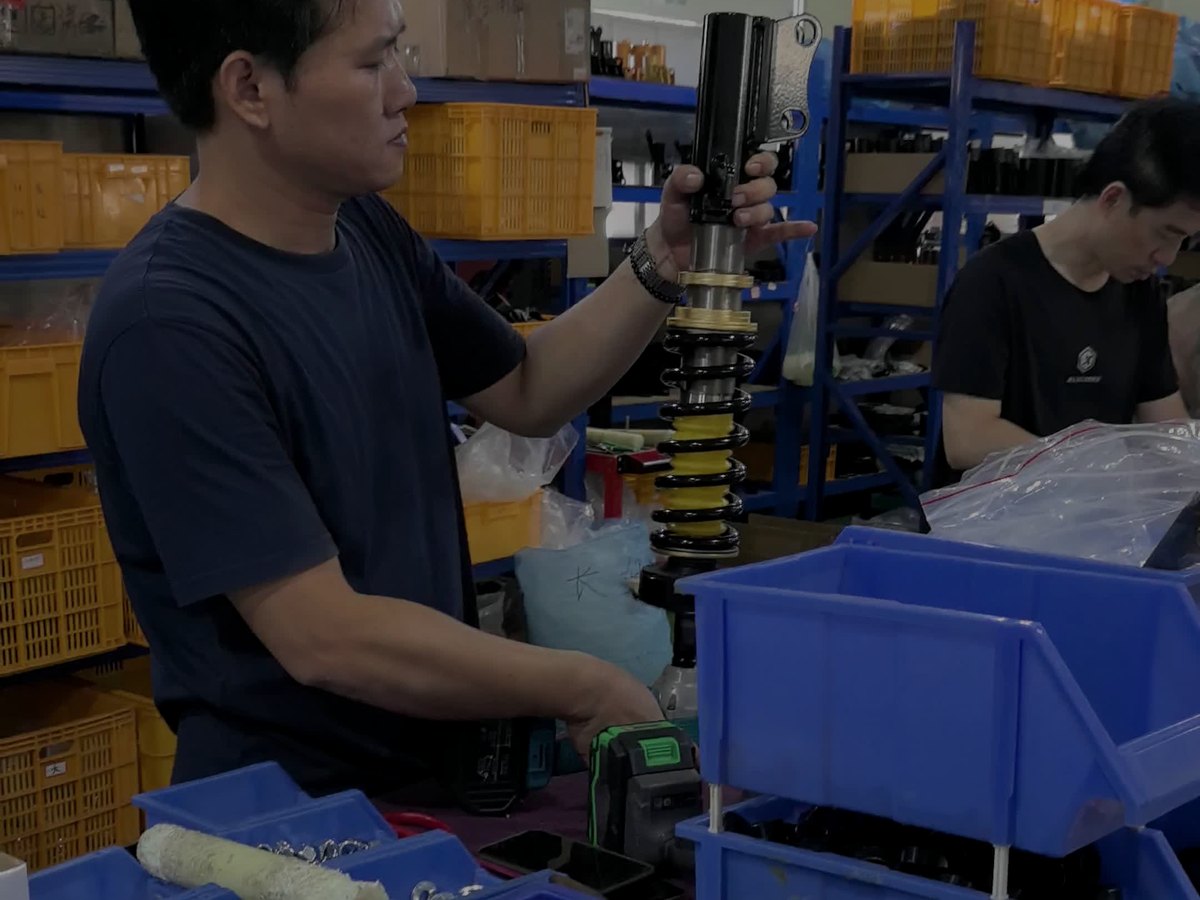
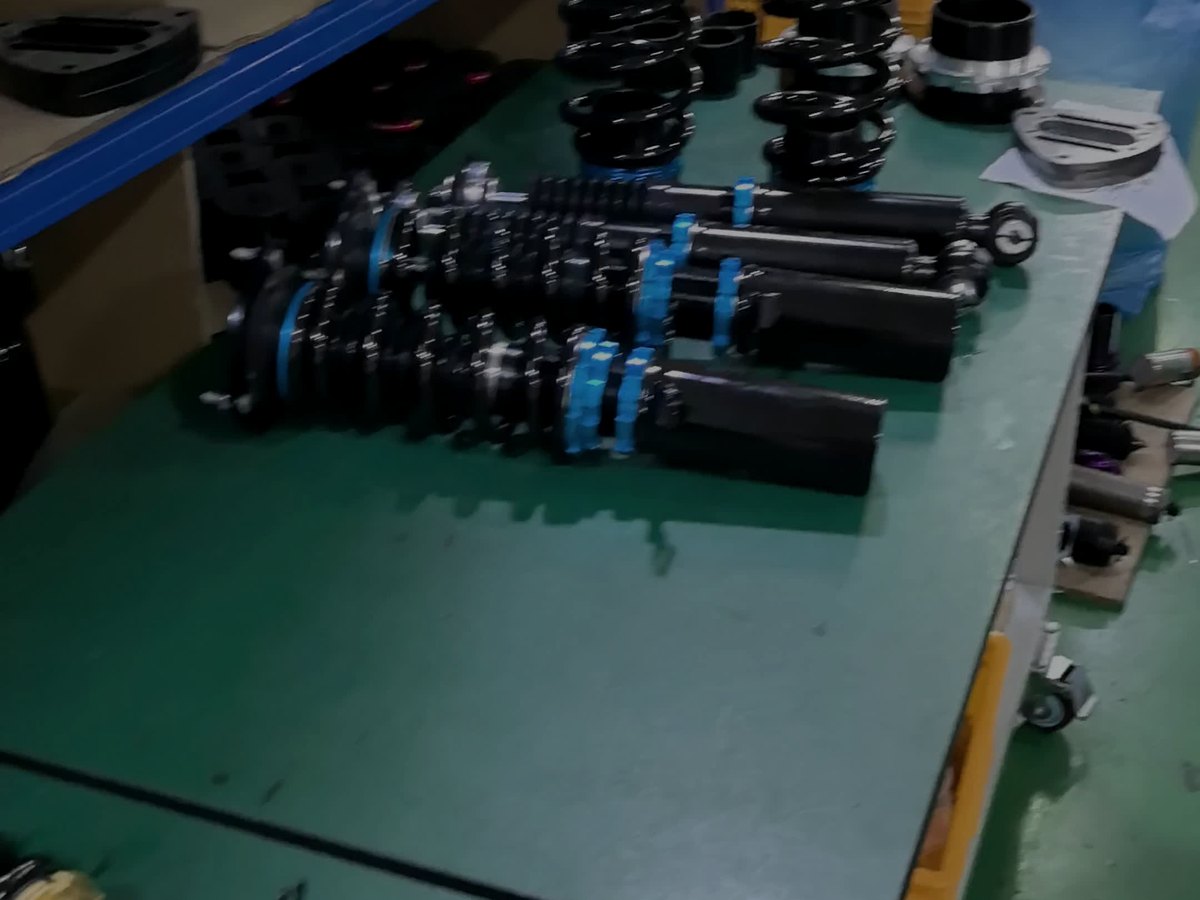
| Assembly and testing | Damping assembly, adjustment check, leak test, packing | No — cutting this is how you get warranty claims |
| Freight | Sea vs air; port congestion; customs | Air freight, at a cost |
Two rules follow. First, ask for the lead time broken down by stage — a single number hides which stage is the long pole. Second, treat any chassis that needs new tooling as a separate project with its own timeline, not as part of a stock order.
Seven questions that separate a factory from a trading company
1. Which chassis code is this kit built against?
A supplier who answers with a model name is guessing. A factory answers with the platform code and can tell you which markets it covers.
2. Can I have the spring rate card for this chassis?
Front and rear rates, in N/mm and lb/in. If the rates are unavailable, the "fitment" is not engineered — it is a guess with a part number stapled to it.
3. What is in the box?
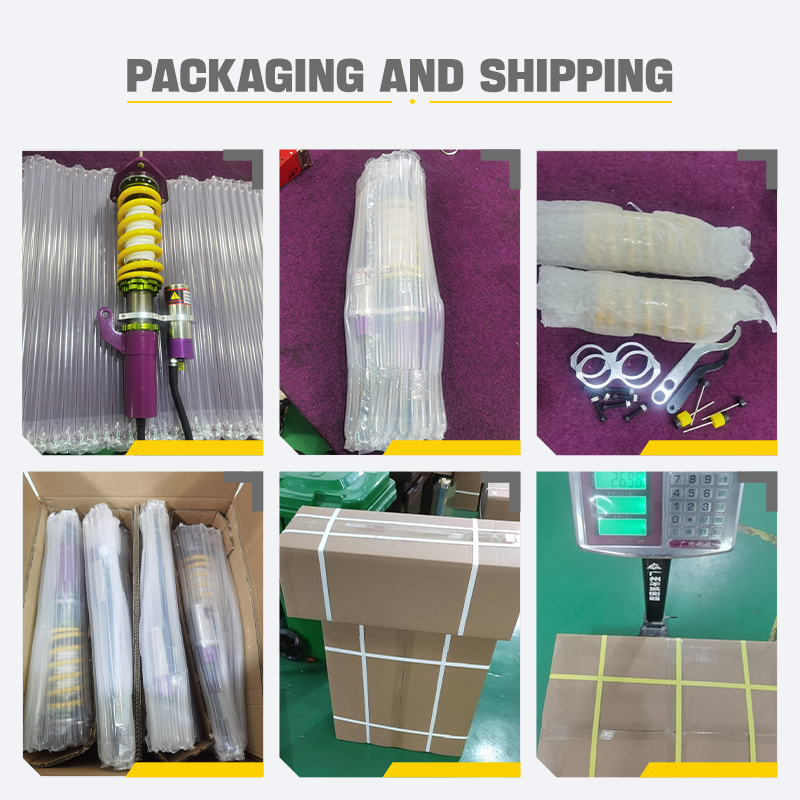
Front and rear struts, or just front? Top mounts included or reused from the car? Camber plates? Bump stops, dust boots, spanner, hardware? A kit that looks cheap often is not — it is missing parts the customer then has to buy separately.
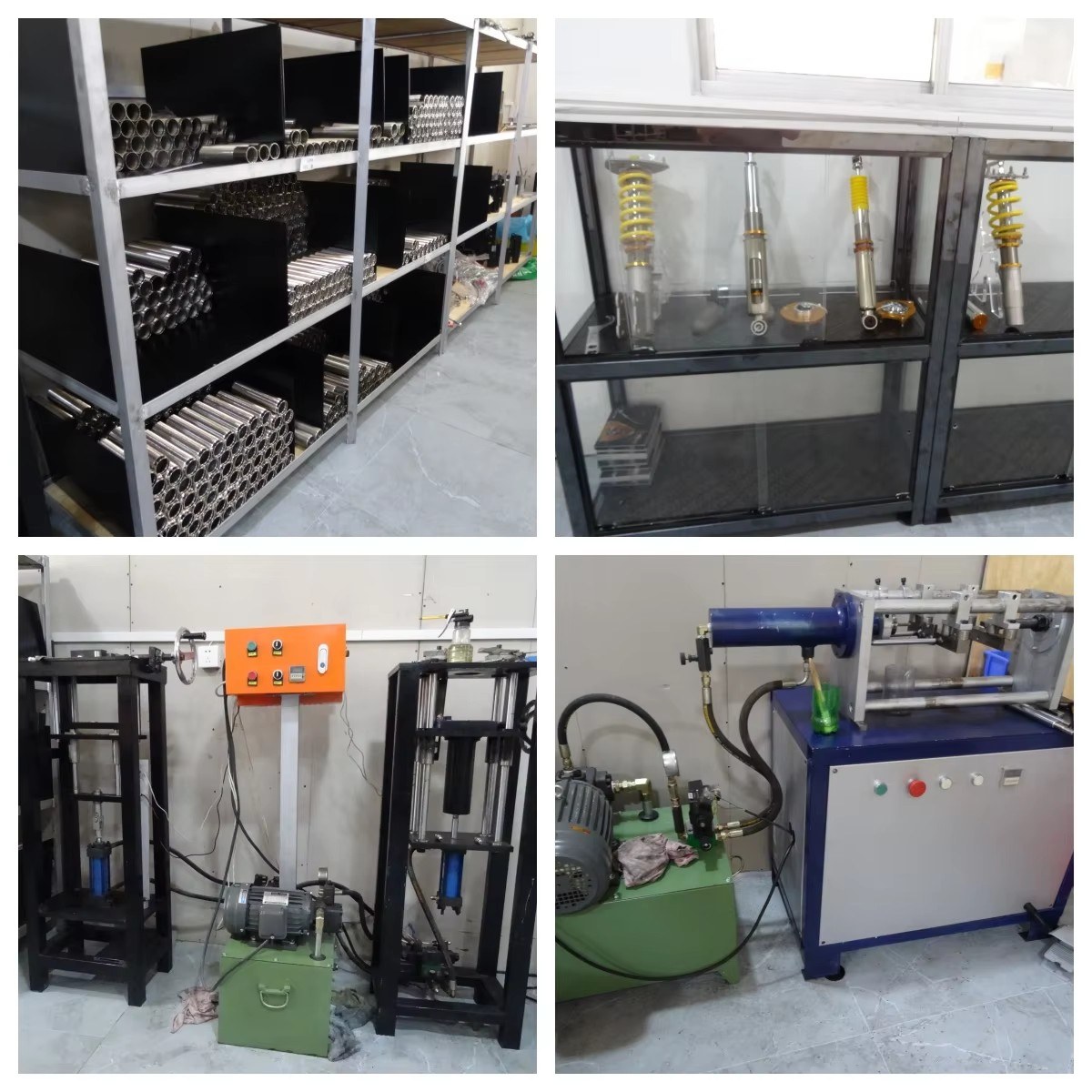
4. How is each unit tested, and can I see the procedure?
Damping force check, adjustment range check, leak test. Ask for the procedure in writing, not a certificate on a wall.
5. What happens after a failure?
Which parts are available as spares, and what is the replacement policy? For a distributor, spare seals and shafts matter more than a warranty headline.
6. What can I brand?
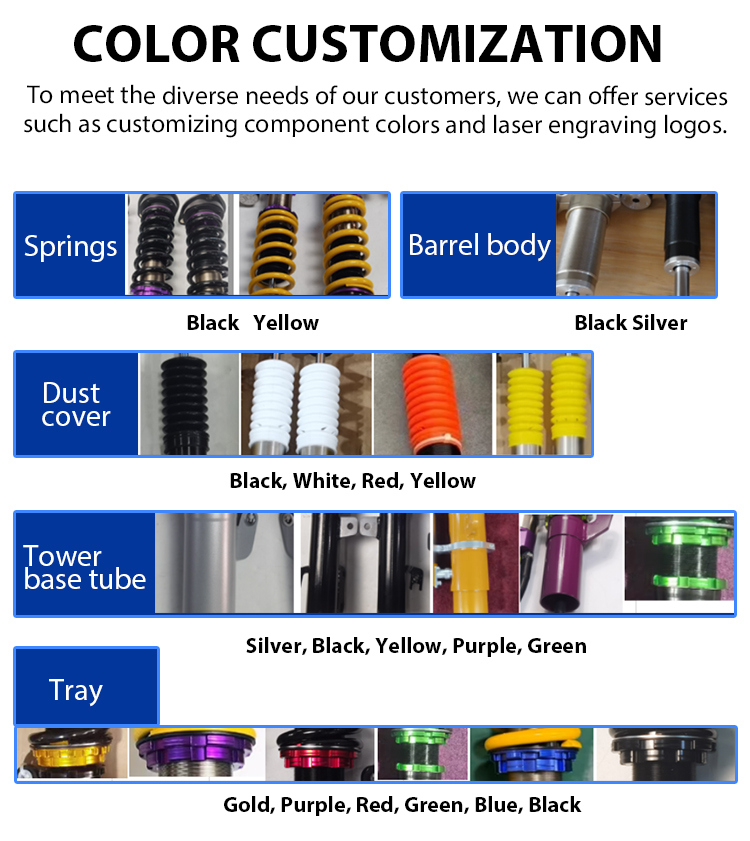
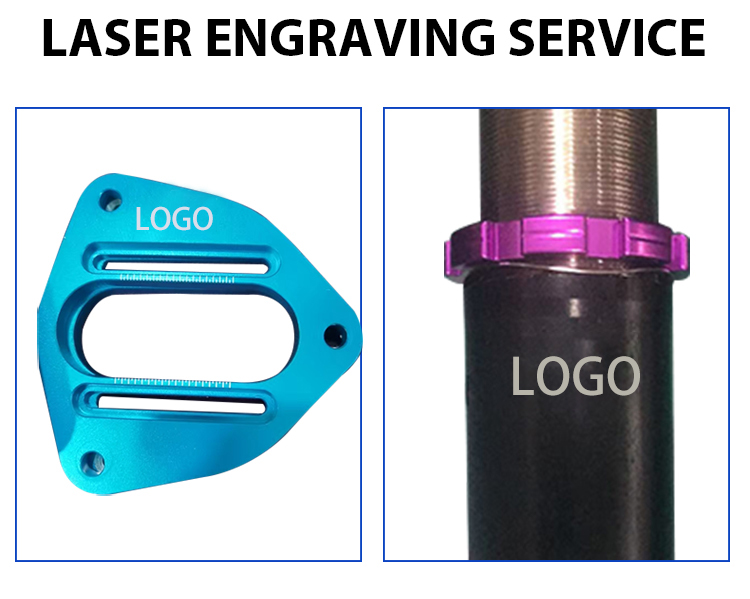
Laser mark on the body, spring colour, collar colour, retail box, manual, barcode label. Ask which of these are included in the quoted price and which are charged as a set-up.
7. Who confirms the order before production?
Ask for a signed-off specification sheet — item numbers, quantities, branding, packaging, test criteria — before the deposit. Every dispute we hear about starts with an order that was agreed verbally.
Red flags in a quote
- A price with no item numbers attached.
- "Fits all models" or "universal fitment" on a coilover kit.
- Lead times quoted in days rather than stages.
- No mention of spring rates anywhere in the documents.
- A willingness to skip the adjustment and leak test to hit a date.
How J-PLUS works with new distributors
We build per chassis — the fitment guide lists 318 chassis-coded applications across 24 brands, each with an item number. OEM and ODM programmes are available: your logo on the body, your spring colours, your packaging. Before any order is confirmed, you get the item numbers, the spring rates and the test criteria in writing.
If you are deciding what to stock first, read monotube vs twin-tube — it is the choice that most affects what your customers complain about.
Start with an item number list. Send the chassis codes you sell most and the quantities you expect — the factory will come back with a quotation you can compare line by line.